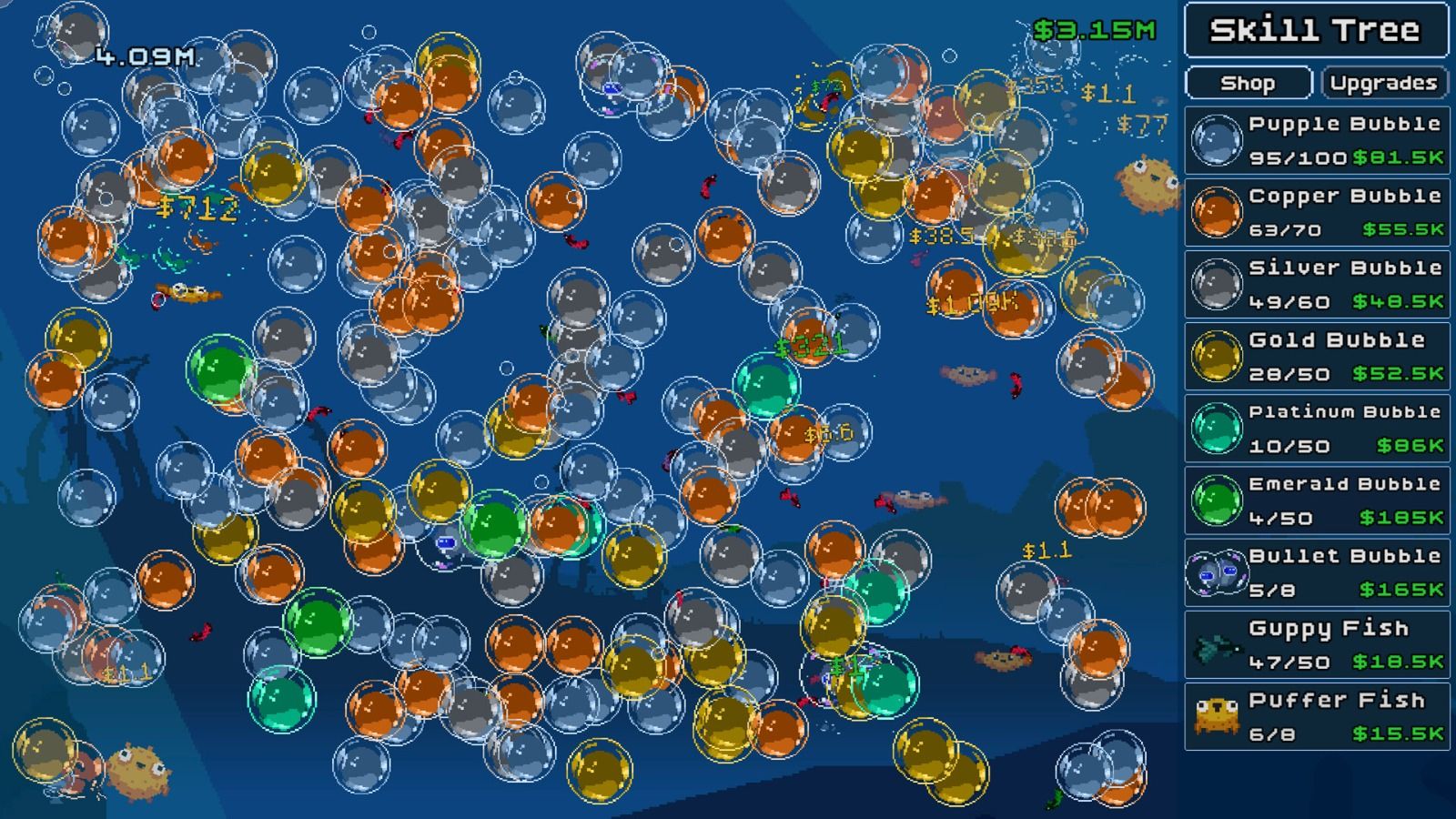

Pupple Pop may look like a simple balloon-popping incremental game at first, but the longer you spend with it, the more its calm pacing and satisfying progression start to click.
Normally, a few hours would be more than enough for me to get a clear idea of a game like Pupple Pop. As someone familiar with incremental and clicker games, I usually know what to look for pretty quickly. You check the core loop, see how the progression works, unlock a few upgrades, and after a short while you can usually tell whether the game has enough momentum to keep you going.
That was exactly what I expected when I first started Pupple Pop.
At first glance, it seemed pretty straightforward. Pop the balloons, earn money, buy upgrades, repeat. Within the first few minutes, the game looked like a simple and familiar take on the incremental formula. Nothing too complicated, nothing too flashy, just a clean loop built around steady progress.
But the more time I spent with it, the more I realized that Pupple Pop had a bit more staying power than I initially expected. By the time I sat down to write this review, I noticed I had already spent around 20 hours with the game. Honestly, I did not expect that at all.
The basic idea behind Pupple Pop is very easy to understand. You pop balloons, collect money, and use that money to buy new upgrades. Over time, your production improves, new systems open up, and the game slowly pushes you toward a more efficient setup. It is a very classic incremental structure, and if you browse Steam for even a few minutes, you can find plenty of games built around a similar idea.
What makes Pupple Pop stand out, though, is that it does not try to turn that formula into a constant dopamine rush.
This is not a game that throws huge surprises at you every few minutes. It also does not give you massive bursts of progress right away. Instead, Pupple Pop moves at a much calmer pace. If you are looking for a clicker where everything escalates insanely fast, this probably will not be exactly what you want.
But that slower pace is also where the game works best.
Progress may be gradual, but it is noticeable. Every upgrade you buy feels like it matters. The game builds itself through small but meaningful steps, and as you keep playing, you can clearly feel your setup becoming more efficient. There are plenty of upgrades to chase, and that gives the game enough structure to last much longer than I first assumed.
After a while, Pupple Pop becomes less of a game you actively focus on every second and more of something that sits comfortably in the background. It is the kind of game you can play while watching a video, listening to a podcast, or doing something else on the side. That relaxed, low-pressure feeling is easily one of its strongest qualities.
The sound design also deserves a mention. A big part of Pupple Pop’s relaxing atmosphere comes from the way it sounds. Each balloon pop has a satisfying little rhythm to it, and more importantly, the effects do not become annoying even after long sessions. That is not always easy to get right in this genre, but Pupple Pop handles it surprisingly well.
Visually, the game keeps things minimal. Instead of big effects or crowded menus, it goes for a clean and readable layout. I think that choice fits the game very well. Pupple Pop is not trying to impress you with visual spectacle. Its strength comes from its calm gameplay loop and the way it keeps you gently engaged over time.
That being said, the game is not perfect.
If you are already very familiar with incremental games, the pacing may feel a little too slow at times. Pupple Pop does not rely on major twists, dramatic changes, or aggressive progression spikes. It plays things fairly safe, and because of that, some players may eventually start to feel the repetition.
But I also do not think Pupple Pop is trying to be a complex or constantly surprising incremental game. It is more focused on being relaxing, long-lasting, and easy to return to. And on that level, it succeeds.
Steam is full of incremental games, and many of them are forgotten after just a few hours because they do not offer much beyond an empty repeating loop. Pupple Pop, however, manages to build a calm and satisfying system underneath its simple surface. It does not overwhelm you, but it does keep giving you reasons to come back.
If you are looking for a relaxing incremental game that you can enjoy over a longer period of time, rather than something fast and explosive, Pupple Pop might be exactly the kind of game you are looking for.