Behind the Game
SCHISMA GAMES Interview
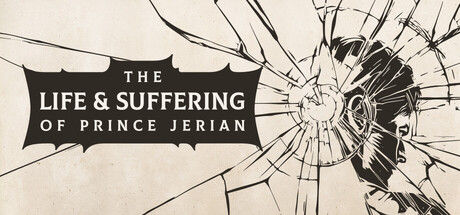
SCHISMA GAMES / The Life and Suffering of Prince Jerian
Fedor Sliusarchuk is one of the creators of The Life and Suffering of Prince Jerian and The Life and Suffering of Sir Brante, two trendy multi-choice games and the Co-founder of Schisma Games.
For 20 years, Fedor Sliusarchuk and his team have been forging and creating their own plots, stories and settings, to promote his partners and his own ideologies from live action roleplay, to making narrative RPG story indie games.
Their core focus was dedicated to crafting grim role playing games with deep narrative in harsh worlds. Both of their games themes explore the human soul, choices and their consequences and the cracked ways of societies.
In this article, we will share with our readers the exclusive interview we conducted with Schisma Games exclusively for theindiegames.com.
Vatan Yoldas:
My first question is; How did you get into indie game development? What motivated you to make games, and where did you find the energy to pursue it?
Fedor Sliusarchuk:
That's a great question. I come from a community centered around Live Action Role-Playing Games (LARP). For nearly twenty years, we've been creating and participating in different LARP experiences. Throughout that time, we've developed our own settings, stories, characters, and worlds. More importantly, we've always thought about games not just as entertainment, but as a form of culture and art. One of my biggest ambitions has always been to bring my partner's philosophy of game design—from LARP into digital games. I wanted to translate those unique experiences into the video game medium. When I finally had the opportunity to invest my own money into a project, I decided it was the right time. That's how we started developing our first game. I think I answered the first part of your question, but let me also talk about motivation and where the energy comes from. We're a small group of friends. When we started this project, most of us lived in a small town in Siberia. Before making games commercially, we created educational digital games, which gave us valuable experience with game development. Eventually, I reached a point where I had enough savings to invest in our first commercial project. Since all of us were passionate gamers who loved deep stories and complex narratives, we felt ready to create something of our own. Most importantly, we believed we had enough experience to not only start the project, but also finish it.
Vatan Yoldas:
That's a great story. Are you still feeling nervous today?
Fedor Sliusarchuk:
Not nervous anymore, just excited about our release, so there are a lot of emotions and a lot happening at once.
Vatan Yoldas:
That's completely understandable. We'd probably feel the same way.
Vatan Yoldas:
Let's move on to the second question.
I'd like to talk about Prince Jerry's mental state. Is the character based on anyone in real life? How would you describe his psychology?
When I first messaged you on Discord, I jokingly described it as a midlife crisis. As the developer, how accurate do you think that interpretation is?
Fedor Sliusarchuk:
Do you mean whether the entire game is about a midlife crisis?
Vatan Yoldas:
Not exactly. Let me rephrase. How would you describe Jerry's mind, his sanity, and his psychological condition?
Fedor Sliusarchuk:
That's a much clearer question. In the game, we have a specific sanity system, but psychology in the game goes far beyond that mechanic. I don't want to spoil too much or force my own interpretation onto players. I hope everyone experiences the story differently and comes to their own conclusions. Our goal was to create a system that combines multiple themes. It's not only about psychology—it's also about politics and the emotional burden of ruling.
Vatan Yoldas:
So it's about the pressure of being a ruler?
Fedor Sliusarchuk:
Exactly.
It's about the pressure of leadership, responsibility, obligation, and living through times of crisis. We wanted to create a system where every aspect influences the others. Psychology doesn't exist in isolation.
One of the central themes of the game is a person's search for the purpose of life.
Our protagonist gradually loses his understanding of that purpose. Society, culture, family, and even the state can obscure it, making it difficult for him to see what truly gives his life meaning.
A major question we explore is how someone can rediscover that purpose.
There's a psychological concept related to this—let me think of the right term... It's associated with the work of Viktor Frankl. His philosophy focuses on how people can find meaning in life and, more importantly, how they can hold onto that sense of purpose even in the most difficult circumstances.
That idea became one of the psychological foundations of the game.
Beyond that, we also have gameplay mechanics tied to psychology. Character development directly affects the ruler's abilities and can even limit certain political decisions. We wanted to create tension between a character's personality and the political responsibilities they're forced to fulfill.
The third major psychological theme is the midlife crisis and depression. Some of that is connected to Geryon's father, Emperor Uhtr, while another part of it concerns Geryon himself. You probably haven't reached that section yet because it appears much later in the game. Depending on the route players take, there are storylines where Geryon ends up in a very difficult psychological state.
Vatan Yoldas:
I think I understand what you're saying. Correct me if I'm wrong, but it sounds like the game's psychology isn't based on just one idea. Instead, you've combined several different psychological themes and built them into the character.
Fedor Sliusarchuk:
Yes, I think that's a fair interpretation.
Vatan Yoldas:
Let's move on to the third question. If you could go back in time and give your younger self one piece of advice about game development or publishing, what would it be?
Fedor Sliusarchuk:
First of all, build a team you can truly trust. Having reliable people around you is absolutely essential.
The second piece of advice is to make sure you have enough funding for your expected budget—and then some. Your first game will almost certainly cost more time and more money than you planned. In fact, you should expect to spend roughly twice as much as your original estimates. Because of that, stay realistic. Stay humble. Don't try to build a game that attempts to do everything at once.
Vatan Yoldas:
Those are actually great answers.
Fedor Sliusarchuk:
I'd add one more thing.
Stay humble, but don't lose your ambition. Your ambition shouldn't be about making money or gaining influence. Instead, you should understand what you really want from your project. For me, the first game isn't primarily about earning money. It's about taking your first step into a new profession. You're creating opportunities for the future. You have to accept that your first project might fail financially. You might even go bankrupt. But even then, you can gain experience, connections, and opportunities that become far more valuable later on.
Vatan Yoldas:
That's a really insightful perspective.
Vatan Yoldas:
I actually played the demo, so I've only experienced the first two chapters.
Without giving away major spoilers, will players eventually be able to meet and speak with the gods? And if so, do those gods have their own personalities and identities?
Fedor Sliusarchuk:
Yes, they absolutely can. However, it's a much more complicated experience than simply meeting another character. These are gods—transcendent beings—so the experience isn't ordinary. When the protagonist encounters a god, it's almost impossible to describe the experience literally. You need metaphors to express it.
Vatan Yoldas:
So it's more symbolic than literal?
Fedor Sliusarchuk: Exactly.
Vatan Yoldas:
Do they communicate through metaphors or riddles?
Fedor Sliusarchuk:
In a way, yes. There are many different story routes in the game. Meeting the gods isn't guaranteed, but one possible path allows the protagonist to encounter them.
Vatan Yoldas:
I know the game has multiple endings rather than one canonical ending. But if you had to choose one ending as your personal canon, which one would it be?
Fedor Sliusarchuk:
We intentionally designed the game so that it wouldn't have a single "correct" path. Of course, I have my own beliefs, values, and ideas, but I never wanted to create a game that pushes my personal ideology onto the player. Instead, I wanted the game to feel like an expedition—one where both the developers and the players discover meaningful questions rather than predetermined answers. When we first started development, I already had a favorite ending in mind. It was connected to the relationship between the protagonist and the gods. That idea existed long before we began making the game. However, during development we discovered completely new story paths that surprised even us. Those unexpected routes became some of my favorites—not because they're better for the characters, but because they surprised me as a creator. So it's difficult for me to choose a single "true" ending. I prefer thinking about the game as an exploration, and I'm proud that our team managed to discover ideas we hadn't anticipated ourselves.
Bonus Question
Vatan Yoldas:
I'd like to ask something that isn't in our script. What's your favorite video game?
Fedor Sliusarchuk:
I have to say Sid Meier's Civilization, especially the first three games. They were a huge part of my childhood. Vatan Yoldas: Civilization? Nice choice. Fedor Sliusarchuk: Yes. Those games shaped the way I think about worlds and systems. Even though they're completely different from the games we're making at Schisma Studio, I still consider them masterpieces. I also enjoy historical games like Ghost of Tsushima, although that's not really the kind of gameplay I personally spend much time with.
BONUS QUESTION
Vatan Yoldas:
If you lived in the Harry Potter universe, which Hogwarts house would you choose?
Fedor Sliusarchuk:
Gryffindor.
Vatan Yoldas:
A classic choice.
Live Action Role-Playing
Vatan Yoldas:
Earlier you mentioned LARP. Is it similar to Dungeons & Dragons?
Fedor Sliusarchuk:
Dungeons & Dragons is tabletop role-playing. LARP is different—you put on armor, pick up a sword, go into a forest, and physically act out the story. In Russia, the LARP community has always been quite large. Originally, many events were inspired by The Lord of the Rings and Tolkien's books. Over time, though, we started creating our own worlds, settings, and stories. Interestingly, not every LARP is about fighting. Some focus entirely on politics, family relationships, cultural conflicts, or social issues. It's a fascinating culture.
Vatan Yoldas:
That's one of the reasons I enjoy role-playing games so much. I love stories with deep lore, like Game of Thrones or The Witcher.
Fedor Sliusarchuk:
Absolutely. I grew up reading Andrzej Sapkowski's books long before the Netflix series existed.
Developer's Daily Routine
Vatan Yoldas:
I'm curious—people often ask about the game, but not about the person behind it. What's your daily routine like? How does a game creator actually spend a typical day?
Fedor Sliusarchuk:
Every project begins with face-to-face meetings. Our core creative group consists of only three people. We spend one, two, sometimes even three months discussing ideas before we write a single line of code. We define the game's structure, characters, themes, and core gameplay. Once that foundation is clear, we continue working remotely because we live in different countries. Every day we meet on Discord, discuss our tasks, and then begin working. My main responsibility is creating the story. First we outline each chapter. Then we design every scene. Finally, I write the scripts. Meanwhile, the programmers focus on coding, interfaces, and technical implementation. After the first draft is complete, we revise it repeatedly—sometimes rewriting the same text ten times before we're satisfied. Only then do we integrate everything into the game engine and begin testing. Testing is actually my least favorite part. When I'm writing, the game feels perfect in my imagination. Testing forces me to confront bugs, design flaws, and all the things that don't work. Fortunately, my teammates are much better at polishing than I am. At this stage of development, while they're fixing bugs, I mostly focus on our community, writing articles about the game, and communicating with players. Overall, my workday revolves around my computer. When I'm writing, I usually disconnect from the internet for four to six hours so I can focus entirely on the story.
Family and Friends
Vatan Yoldas:
How did your friends and family react when you decided to become a game developer? Did they believe in you?
Fedor Sliusarchuk:
I was already around thirty-five when we decided to create our first game. My parents didn't have particularly strong opinions about it. At the time, I had a stable and well-paying job in Moscow, so I had the financial security to take that risk. That was a privilege. If the project failed, I wouldn't lose everything. I could afford to try.
The Success of The Life and Suffering of Sir Brante
Vatan Yoldas:
The Life and Suffering of Sir Brante received awards and became a well-known game. How does that feel?
Vatan Yoldas:
The Life and Suffering of Sir Brante received awards and became a well-known game. How does that feel? Fedor Sliusarchuk: Honestly, I still think of it as a niche game made for a very specific audience. It became much more successful than we expected, but I never measured success only by sales. From the beginning, my ambition wasn't simply to become part of the game industry. I wanted our work to become part of a broader cultural conversation. I hoped people would discuss our games from artistic, social, and philosophical perspectives. In some ways, that actually happened. University students even wrote academic papers about our game. I'm sure only their professors and our team ever read those papers, but that meant a great deal to me.
Closing
Vatan Yoldas:
I hope your story inspires more people to start making games. This has been a wonderful conversation. Thank you so much for your time.
Fedor Sliusarchuk:
Thank you. It was a pleasure talking with you all.
We would like to thank Fedor for taking the time for this interview and the amazing conversation.we hope that others can take inspiration from him to create their own projects, as we hope to talk with them in the future.